You took the vacation.
You hired the coach.
You downloaded the sleep app, cut the alcohol, started the morning walk, and blocked your calendar every Friday.
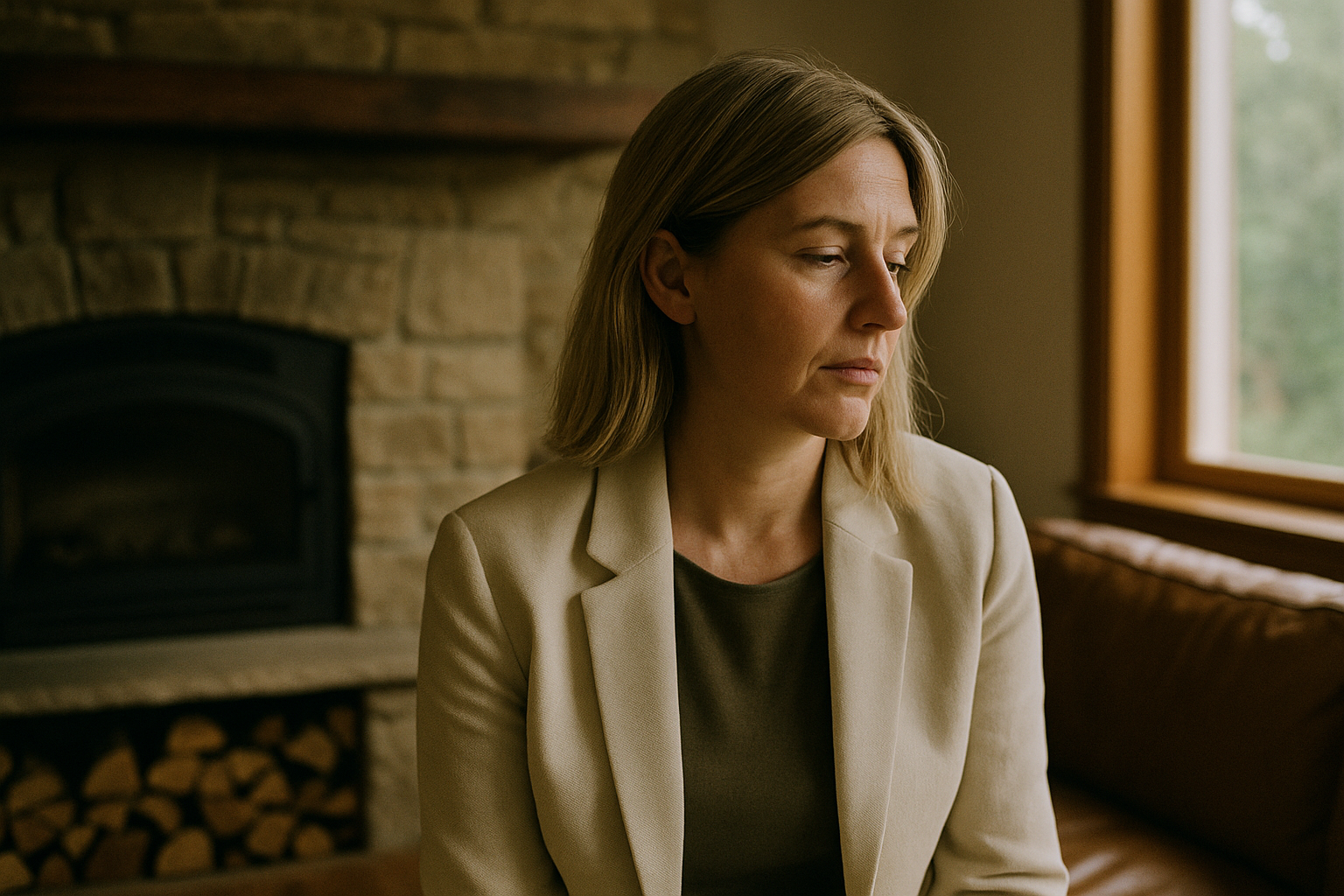
And you are still exhausted.
Not a little tired. Ground-level exhausted. The kind that doesn't lift after eight hours of sleep.
The kind that makes you stare at your inbox and feel nothing — or everything at once.
This is what happens when burnout persists after recovery attempts that should, by every reasonable measure, have worked.
Here is the hard truth most wellness frameworks won't tell you.
Habits don't fix a dysregulated nervous system.
They dress it up. They give it a schedule.
But underneath the green smoothie and the gratitude journal, your body is still running a threat response that was never switched off.
And no amount of sleep hygiene will change that.
The Problem Nobody Names Correctly
Burnout is not a time-management problem.
It is not a self-care deficit.
It is not even a stress problem in the conventional sense.
Burnout is a physiological state.
It is what happens when your nervous system has spent so long in mobilisation — high alert, high output, high vigilance — that it can no longer find its way back to baseline on its own.
Your brain registers the threat of a missed deadline the same way it registers a predator.
Your body doesn't distinguish between a difficult board meeting and a physical emergency.
It just responds.
Cortisol spikes.
Adrenaline moves through you.
Your heart rate shifts.
Your digestion slows.
Your immune system deprioritises itself.
Do that thousands of times over years — which is exactly what a high-stakes career demands — and your nervous system stops returning to rest.
It gets stuck.
The switch breaks.
And now you live in the residue of every crisis you ever navigated, even when there's no crisis in front of you.
This is why burnout persists after recovery for so many high-performing executives.
The problem was never the workload.
The problem is what the workload did to your biology.
Why Everything You've Tried Has Only Gone So Far
Therapy helped you understand the patterns.
But understanding a wound doesn't close it.
Coaching gave you better frameworks.
But frameworks live in the prefrontal cortex — and a dysregulated nervous system bypasses the prefrontal cortex entirely when it's in threat mode.
Mindfulness created small pockets of calm.
But ten minutes of stillness doesn't discharge years of accumulated stress chemistry.
The vacation was real rest for about four days.
Then the fifth morning arrived and you were already thinking about what was waiting when you returned.
None of these things are wrong.
They are just operating at the wrong level.
They are addressing the software when the hardware is the problem.
Your habits live on top of your nervous system.
They don't reach it. That gap — between what you're doing and what your body actually needs — is exactly why high-functioning exhaustion can persist for years even when someone is doing everything right on the surface.
What's Actually Happening in Your Body
There is a branch of your nervous system called the autonomic nervous system.
It runs below conscious thought.
It governs your heart rate, your digestion, your immune response, your capacity for connection, your ability to think clearly under pressure.
It has two primary modes.
Activation — the sympathetic response, fight or flight.
And recovery — the parasympathetic response, rest and repair.
Healthy nervous system function moves fluidly between these states.
You respond to a stressor.
You recover.
You respond again.
You recover again.
The rhythm is the health.
But when activation becomes chronic — when the demands never stop, when leadership means being perpetually available, perpetually responsible, perpetually on — the recovery channel starts to close.
Your body stops trusting that rest is safe.
It interprets stillness as danger.
So even when you do stop, you don't actually recover.
You just pause.
And when burnout persists after recovery, this is almost always the biological mechanism behind it.
The vagus nerve is the primary channel of parasympathetic regulation.
It is measurable, trainable, and directly connected to your capacity to shift out of threat states.
Most recovery protocols never touch it.
The Reframe: Recovery Is Not a Reward — It's a Skill
Most high performers treat recovery the way they treat holidays.
Something you earn.
Something that happens when the work is done.
Something passive.
That model doesn't work when your nervous system is dysregulated.
Because a dysregulated nervous system will not recover passively.
It needs to be taught — through specific, repeated physiological inputs — that the threat is over.
That rest is allowed.
That it is safe to come down.
This is not a mindset shift.
It is not about believing you deserve rest.
It is biology.
Your vagus nerve responds to breath pattern.
Your heart rate variability responds to specific movement and stillness sequences.
Your cortisol rhythm responds to light exposure, meal timing, and nervous system state — not to your intentions.
The executives who fully recover from burnout — who don't just manage it but actually resolve it — are the ones who stop trying to think their way out of a physiological state and start working with the body directly.
This is the foundation of physiological infrastructure — the idea that high performance has to be built on a body that can actually support it, not just a schedule that looks balanced from the outside.
What a Nervous-System-First Approach Actually Looks Like
It does not look like more habits stacked on top of existing habits.
It looks like an honest audit of your actual physiological state — not your perceived stress level, but measurable markers.
Heart rate variability.
Sleep architecture.
Cortisol curve.
Inflammatory load.
These tell you what your body is doing when you're not watching.
From that baseline, you build a protocol that speaks directly to the autonomic nervous system.
Not supplements.
Not optimisation hacks.
Specific inputs that signal safety to a body that has forgotten what safety feels like.
Breathwork is one of the most direct levers.
Specific breath patterns — particularly extended exhales and nasal breathing under load — directly activate the vagus nerve and shift your heart rate variability in real time.
This is not relaxation technique.
This is mechanical regulation. Vagus nerve activation through breathwork is one of the few tools that works below the level of thought, which is exactly where burnout lives.
Somatic awareness is another.
Most executives have been trained to override body signals.
To push through.
To perform regardless of internal state.
Rebuilding the ability to read and respond to your own physiology — rather than suppress it — is not softness.
It is intelligence.
It is the foundation of sustainable decision-making at altitude.
Pattern interruption at the transition points matters more than most people realise.
The moment you close the laptop.
The moment the flight lands.
The moment you walk through the front door.
These thresholds are where your nervous system either starts to shift — or keeps running at the same frequency it's been running all day.
A deliberate decompression practice at these moments doesn't take long.
But it changes everything about what the next hour feels like.
Sleep is not the outcome — it's the input. Most exhausted executives think more sleep will solve the problem.
But a dysregulated nervous system produces poor sleep quality regardless of duration.
You have to regulate the system first.
Then sleep does its job.
Why Burnout Persists After Recovery — and What Finally Changes It
The executives who come through our work describe a specific shift.
Not a dramatic one.
Quiet, actually.
The noise of the world falls below awareness for the first time in years.
Not because external circumstances changed.
Because their nervous system finally found its floor again.
One client — a senior partner at a global firm, 44, two children, twelve years at the top of her field — described it this way: "I had done everything.
Therapist, sleep tracker, executive coach, two weeks in Portugal.
I came back and within four days I was exactly the same.
What changed wasn't another thing I added.
It was finally addressing what my body had been carrying the whole time."
Another — a technology executive who had taken a six-month sabbatical and returned still depleted — realised that the sabbatical had been a pause, not a repair.
His nervous system had no mechanism to discharge what it had accumulated.
The rest didn't land because the system wasn't ready to receive it.
When burnout persists after recovery, the question to ask is not what else can I try? It is have I actually addressed the physiology — or have I been working around it?
That is a different question. And it leads to a different answer.
If you have tried therapy, coaching, and meditation and still feel the same, this is likely why.
The tools weren't wrong.
They just weren't reaching the part of you that needed to change.
Where to Go From Here
If this describes your experience — if you have done the work, made the changes, taken the time, and still feel like something isn't resolving — this is the work we do.
The Sovereign Executive Method is a structured programme built around nervous system regulation, physiological assessment, and the kind of deep somatic recalibration that habits alone cannot provide.
It is not therapy.
It is not another coaching engagement.
It is a systematic approach to rebuilding the biological foundation that high performance requires — and that years of high-stakes work erodes.
This work is available through Private Advisory for those who want direct, one-to-one support over twelve weeks.
It is also available through the Integration Lab for those who want a structured cohort environment with peer-level accountability.
The first step is understanding where your system actually is. Not where you think it is — where the data says it is.
If you are ready to stop managing burnout and start resolving it, reach out to begin your assessment.
The conversation is private.
The process is precise.
The outcome is different from anything you've tried before — because it starts where the problem actually lives.
Frequently Asked Questions
Why does burnout persist after recovery even when I'm doing all the right things?
Burnout persists after recovery when the interventions being used — habits, rest, mindfulness — operate at a level above the nervous system, not within it. Until the autonomic nervous system is specifically recalibrated, the underlying physiological dysregulation continues regardless of surface-level changes.
How long does it take for a dysregulated nervous system to actually recover?
This depends on how long the dysregulation has been present and how directly you address it. With the right physiological inputs applied consistently, most people notice measurable shifts within six to eight weeks.
Full recalibration typically takes three to six months of focused work.
Is this different from adrenal fatigue or burnout syndrome?
These terms describe overlapping territory.
Nervous system dysregulation is the underlying mechanism behind both.
Treating it as a nervous system problem — rather than a hormone problem or a mental health problem alone — produces more durable outcomes because it addresses the root cause rather than the downstream symptoms.
Can therapy or coaching address this, or do I need something different?
Therapy and coaching are valuable, but they primarily engage the cognitive and psychological layers.
When burnout persists after recovery through these channels, it usually means the somatic and physiological layer needs direct attention.
The most effective approach combines them rather than choosing between them.
What is heart rate variability and why does it matter for burnout?
Heart rate variability (HRV) measures the variation in time between heartbeats and is one of the clearest indicators of nervous system health.
Low HRV is consistently associated with chronic stress, poor recovery, and burnout — and it gives you objective data about your physiological state that self-reporting cannot capture.
Do I need to take time off work to do this kind of recovery work?
Not necessarily.
The most sustainable approach integrates nervous system regulation into your existing life rather than requiring you to step away from it. Sabbaticals can help, but as many executives discover, burnout persists after recovery breaks when the underlying physiology hasn't changed — which means the work can and should happen in parallel with your life, not in place of it.
Disclaimer
The content in this article — including any breathing protocols, somatic tools, nervous system frameworks, and physiological concepts — is provided for educational and informational purposes only.
It is not medical advice and is not intended to diagnose, treat, cure, or prevent any condition.
The Sovereign Executive methodology, including the SIC Protocol™, the Neural Reset, and the Snap Point framework, are coaching tools developed through lived experience and long-term physiological study.
They are designed to support high-functioning women in building physiological resilience — not to replace clinical care.
If you are managing a medical condition, a diagnosed anxiety or mood disorder, or are under the supervision of a licensed healthcare provider, please consult your provider before applying any protocol described here.
Client stories and outcomes shared on this platform reflect individual results.
They are real, and they matter.
They are not a guarantee that you will experience the same outcome.
Your results will depend on your consistency, your starting point, and a range of factors unique to you.
All content on this platform is the intellectual property of Stephanie Chang Ramos / The Sovereign Executive.
All rights reserved.
Disclaimer
The content in this article — including any breathing protocols, somatic tools, nervous system frameworks, and physiological concepts — is provided for educational and informational purposes only. It is not medical advice and is not intended to diagnose, treat, cure, or prevent any condition.
The Chang Method™, including the SIC Protocol™ and the Neural Reset, are coaching tools developed through lived experience and long-term physiological study. They are designed to support high-functioning women in building physiological resilience — not to replace clinical care.
If you are managing a medical condition, a diagnosed anxiety or mood disorder, or are under the supervision of a licensed healthcare provider, please consult your provider before applying any protocol described here.
Client stories and outcomes shared on this platform reflect individual results. They are real, and they matter. They are not a guarantee that you will experience the same outcome. Your results will depend on your consistency, your starting point, and a range of factors unique to you.
All content on this platform is the intellectual property of Stephanie Chang Ramos / The Chang Method. All rights reserved.