You booked the trip.
You needed it. And somewhere around day two, you realized the vacation was functioning less like a break and more like a logistics problem with better weather.
This is happening to a lot of women right now. And it is not a coincidence.
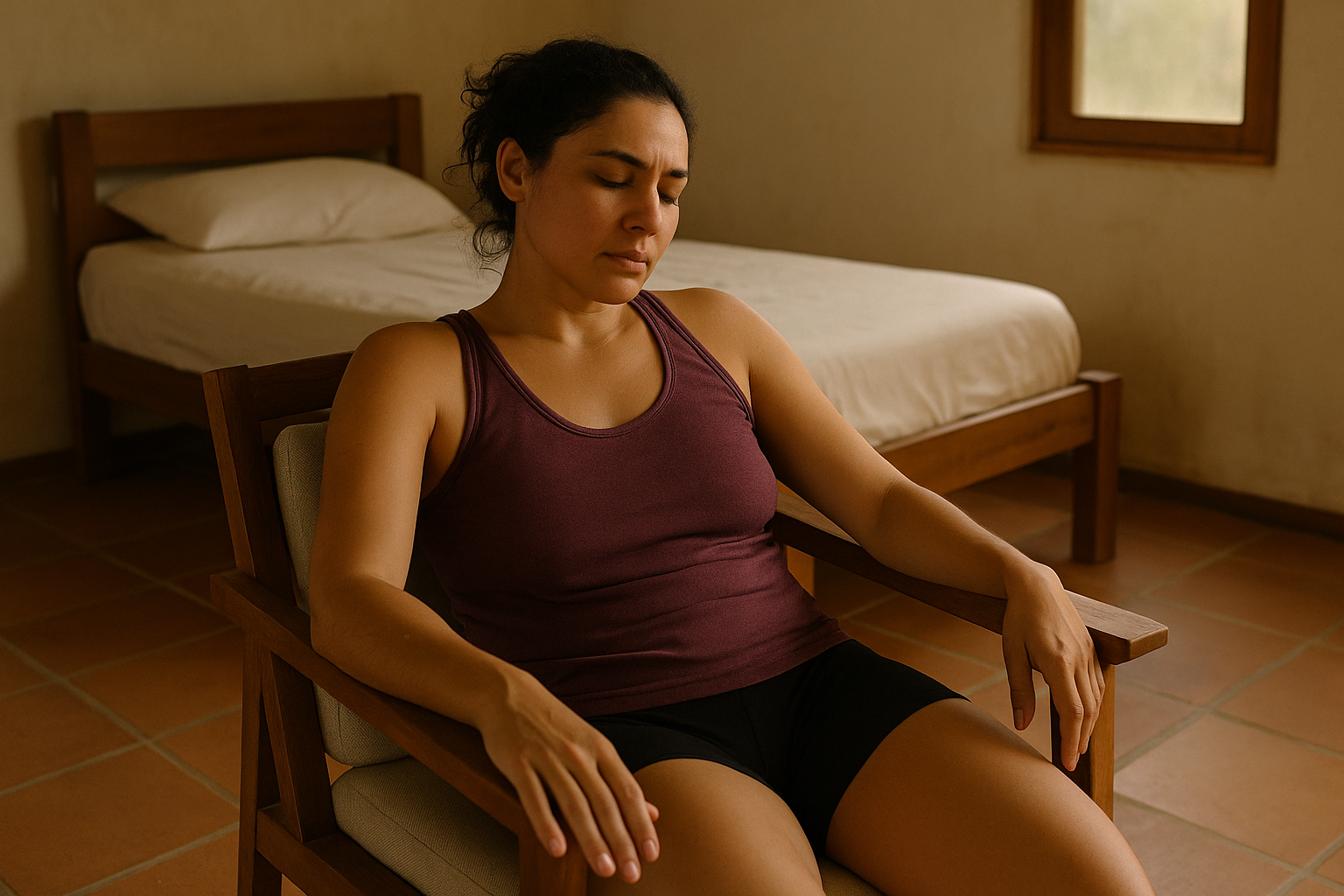
Across the internet, women are quietly opting out of the packed itinerary, the content-worthy restaurant list, the "while we're here, we should" mentality.
They are booking a single room somewhere unremarkable.
They are bringing nothing to do. They are sleeping, staring at the ceiling, and calling it a win.
It is being called the "boring vacation" trend.
But it is not really about vacations.
It is about how deep the rest vacation burnout has gotten for women — and how little the usual fixes are touching it.
When the Vacation Is Also Exhausting
There is a specific kind of tired that does not respond to time off.
You have probably met it.
You get on the plane already behind.
You manage the packing, the itinerary, the check-in, the food preferences of whoever came with you.
You take photos that look like rest.
You come home more depleted than when you left.
One phrase keeps showing up in conversations with women who have tried this. "The vacations feel like survival missions rather than recovery."
That line is not dramatic.
It is accurate.
And it points to something real: when your nervous system is already running at its limit, adding unfamiliar logistics, social demands, and the pressure to have a good time does not reduce the load.
It adds to it.
The boring vacation is a workaround.
A smart one, actually.
But it is still a workaround.
Why Rest Vacation Burnout Doesn't Respond to Time Off Alone
Here is the part that matters.
If rest alone fixed this kind of exhaustion, a week at a beach house would do it. It does not — not for the women who are most exhausted, and not for long.
They come back restored for maybe four days.
Then the heaviness returns.
And they cannot figure out why they cannot seem to stay better.
The reason is structural.
The exhaustion that drives women toward deliberately boring vacations is not caused by too many activities.
It is caused by a nervous system that has reorganized itself around the assumption that the emergency is permanent.
Not stress. Not a bad week. Not a backlog at work.
A body that has been running high alert for so long it has quietly decided this is just how life is now.
When that is the baseline, rest softens the edges but does not change the architecture.
You wake up the next day, and the system is already back online, already braced, already running the background check for what needs managing.
That is not a character flaw.
It is physiology.
And it is solvable — but not with rest alone.
What Women Have Already Tried
Before landing on "just go somewhere quiet and do nothing," most women in this state have tried a lot.
The productivity systems.
The morning routines.
The apps that send breathing reminders.
The therapy that validates the exhaustion without shifting what is underneath it. The supplement stack.
The digital detox.
The weekend retreat that felt good for seventy-two hours.
None of them were wrong to try.
The problem is that most of those tools are working on the surface — on behavior, on mindset, on the visible output of the exhaustion.
They are not touching the nervous system itself.
Another productivity system will not fix a dysregulated nervous system.
More discipline is not the answer.
And more rest — even boring, intentional rest — only goes so far if the body's baseline threat level never actually comes down.
The boring vacation is genuinely helpful because it removes stimulation.
That is real.
But it is still external management of an internal problem.
What the Boring Vacation Trend Is Actually Telling Us
Women are not choosing boring vacations because they have become boring people.
They are choosing them because their nervous systems are so overstimulated that novelty — the thing that used to feel exciting about travel — now registers as threat.
More input.
More to manage.
More to respond to.
The impulse to strip everything back is a smart one.
The body is asking for less noise, not more experience.
That is worth listening to.
But the goal is not to spend the rest of your life on a sensory-deprivation vacation.
The goal is to get to a place where you can be fully present in your actual life — the noisy, busy, full one — without white-knuckling through it.
That requires something different from rest.
It requires rebuilding the physiological foundation underneath the rest.
The Real Problem: Your Body Has Set a New Normal
Here is what happens when high-functioning exhaustion runs long enough.
Your nervous system stops treating high alert as a temporary response to a temporary stressor.
It starts treating it as the baseline.
This is not something you decide.
It is something your body does to survive what you keep asking of it.
The signs are specific.
Chest tightness before the day even starts.
Waking at two in the morning with your mind already running.
Reacting to a small disruption — a spilled cup, a missed message — with a force that surprises even you.
Feeling like you cannot see further than one day ahead.
These are not personality traits. They are nervous system outputs.
And when that is the state you are living in, you are not going to think your way out of it. You are not going to vacation your way out of it either.
The system needs direct input — something that speaks to the body in a language the body actually understands.
That language is breath and movement.
Not as wellness aesthetics.
As physiological tools.
What Actually Changes the Architecture
The nervous system responds to breath in a way it does not respond to insight.
You can understand completely why you are exhausted and still be exhausted.
Understanding lives in the mind.
The body is operating on a different track.
And the one autonomic function you can consciously override — the one lever you actually have access to — is how you breathe.
A slow, extended exhale activates the vagus nerve.
That is not a wellness concept.
That is a physiological fact.
The exhale tells the nervous system it is safe to downshift.
The longer it is relative to the inhale, the stronger that signal.
Done once, it creates a moment of relief.
Done consistently, it begins to reset what the body treats as normal.
Movement works the same way — not intense exercise that spikes cortisol further, but regulated movement that signals safety.
Walking.
Slow stretching.
Pole training.
Anything that brings the body back into the present moment and out of the held-breath vigilance of permanent high alert.
The way walking regulates your nervous system is not about burning calories.
It is about using deliberate movement to bring your threat response down to a level your body can actually live at.
And the science behind slow breathing is clear: it is not a supplement to the work.
It is the work.
What This Looks Like in Practice
The shift from surviving vacation to actually inhabiting it comes from changing what you do daily, not just annually.
The Extended Exhale Practice is a starting point.
Inhale through the nose, let the whole body expand — belly, ribs, chest.
Then exhale for twice the length of the inhale.
Three to ten minutes.
Not because it is relaxing in the moment (it might not be, at first).
Because it is directly communicating with a nervous system that has forgotten what safe feels like.
The Coming-Home Practice — five minutes of movement, five minutes of extended exhale, a brief body scan, and a deliberate moment of arrival — exists specifically to create a physiological boundary between the demand-state of work and the rest of your life. That transition matters more than most people realize.
The boardroom does not automatically leave your body when you close the laptop.
None of this is complicated.
All of it requires showing up for it before the vacation, not just on it.
Real Results From Real Women
Hannah came in experiencing daily panic attacks.
Low confidence.
Unable to set limits at work or in her relationships.
After working with breathwork and nervous system regulation tools consistently, the panic attacks stopped.
Not reduced — stopped.
She described the shift as learning to listen to herself again.
To know what she actually wanted, not just what was being asked of her.
Maria came in as a business owner who could not relax even when she tried to. She dreaded vacation.
In a single session working with somatic practice and limit-setting tools, she learned to downshift — and came back from that vacation having actually rested.
Liliya came in with disrupted sleep and emotional swings that did not respond to anything she had tried.
After implementing a consistent evening protocol, her sleep restored.
The shift she described was from heaviness to hopefulness.
These are not dramatic transformations from years of intensive work.
They are what happens when the intervention finally matches the actual problem.
The Point Is Not to Stop Wanting Things From Your Vacations
The boring vacation trend is not a sign that women no longer want full, interesting lives.
It is a sign that the gap between the life they are carrying and the capacity they have left to carry it has grown too wide.
The goal is not to stay in the boring vacation.
The goal is to rebuild enough internal capacity that a full, present, alive vacation becomes possible again.
That your ordinary Tuesday becomes possible again — not something to survive, but something to inhabit.
Your exhaustion is not seasonal.
It is structural.
And structural exhaustion requires structural solutions, not just quieter scenery.
Rest vacation burnout is real.
But rest alone was never going to fix it. The women figuring that out are not doing anything wrong.
They are doing the smart thing: they are listening to what their body is actually asking for.
The next step is giving it something that actually answers.
Where to Start
If you have tried rest, productivity systems, apps, retreats, and still come back depleted — the problem is not your approach to vacation.
It is not your discipline.
It is your nervous system's baseline, and it can be changed.
The six-question quiz at quiz.schangramos.com takes ninety seconds and shows you exactly where your system is breaking down right now.
Not in theory.
In the specific places your energy is leaking and your capacity is draining.
That is the map. And the map is where the real work starts.
Frequently Asked Questions
Is choosing a boring vacation a sign of burnout?
It can be one signal that your nervous system is overstimulated enough that novelty registers as additional load rather than excitement.
Rest vacation burnout often shows up as a preference for stripping everything back rather than adding more experience.
It is worth paying attention to, especially if it feels less like a preference and more like a necessity.
Why doesn't rest fix exhaustion for some women?
When exhaustion is structural — meaning the nervous system has reset its baseline to permanent high alert — rest softens the edges but does not change the underlying architecture.
The body returns to its elevated state within days because rest alone does not address what is driving the threat response in the first place.
What is the difference between being tired and nervous system dysregulation?
Ordinary tiredness resolves with sleep and rest.
Nervous system dysregulation persists despite rest, shows up as chest tightness before the day starts, disproportionate reactions to small disruptions, and a sense that even downtime does not feel restorative.
The distinction matters because the solutions are different.
Can breathwork actually change how depleted I feel?
Breathwork works directly on the autonomic nervous system through the vagus nerve — a mechanism that does not require belief or insight to function.
Consistent practice of extended exhale breathing changes what the body registers as its default state over time.
The science behind this is well-established and is not a wellness concept — it is physiology.
How is this different from just needing more rest or a better vacation?
Rest vacation burnout women often experience is not resolved by a longer or quieter vacation — Maria described dreading vacation entirely before addressing the underlying nervous system patterns, and found that even a single session of somatic practice changed her ability to actually rest.
The issue is internal capacity, not external circumstances.
Where do I start if I recognize this pattern in myself?
The most direct starting point is understanding exactly where your system is breaking down — which is different for every woman depending on her load and history.
The ninety-second quiz at quiz.schangramos.com gives you a specific read on your pattern in under two minutes, which is a cleaner starting point than guessing.
Disclaimer
The content in this article — including any breathing protocols, somatic tools, nervous system frameworks, and physiological concepts — is provided for educational and informational purposes only. It is not medical advice and is not intended to diagnose, treat, cure, or prevent any condition.
The Chang Method™, including the SIC Protocol™ and the Neural Reset, are coaching tools developed through lived experience and long-term physiological study. They are designed to support high-functioning women in building physiological resilience — not to replace clinical care.
If you are managing a medical condition, a diagnosed anxiety or mood disorder, or are under the supervision of a licensed healthcare provider, please consult your provider before applying any protocol described here.
Client stories and outcomes shared on this platform reflect individual results. They are real, and they matter. They are not a guarantee that you will experience the same outcome. Your results will depend on your consistency, your starting point, and a range of factors unique to you.
All content on this platform is the intellectual property of Stephanie Chang Ramos / The Chang Method. All rights reserved.